



Neurodivergent adult aged 27+
You’re the odd one out, the ‘weird’ one in the group. You might think too much, imagine too much, feel too much, move too much. You know a lot about the most ‘unusual’ topics. You work and learn at your own pace. And you fall in love, care, get angry, and forgive in your own unique way. You might be the life of the party, or the one who feels like an uninvited guest.
We know you. We see you. At our party, you always have an invitation.
You are one of us.
Let’s clarify something.
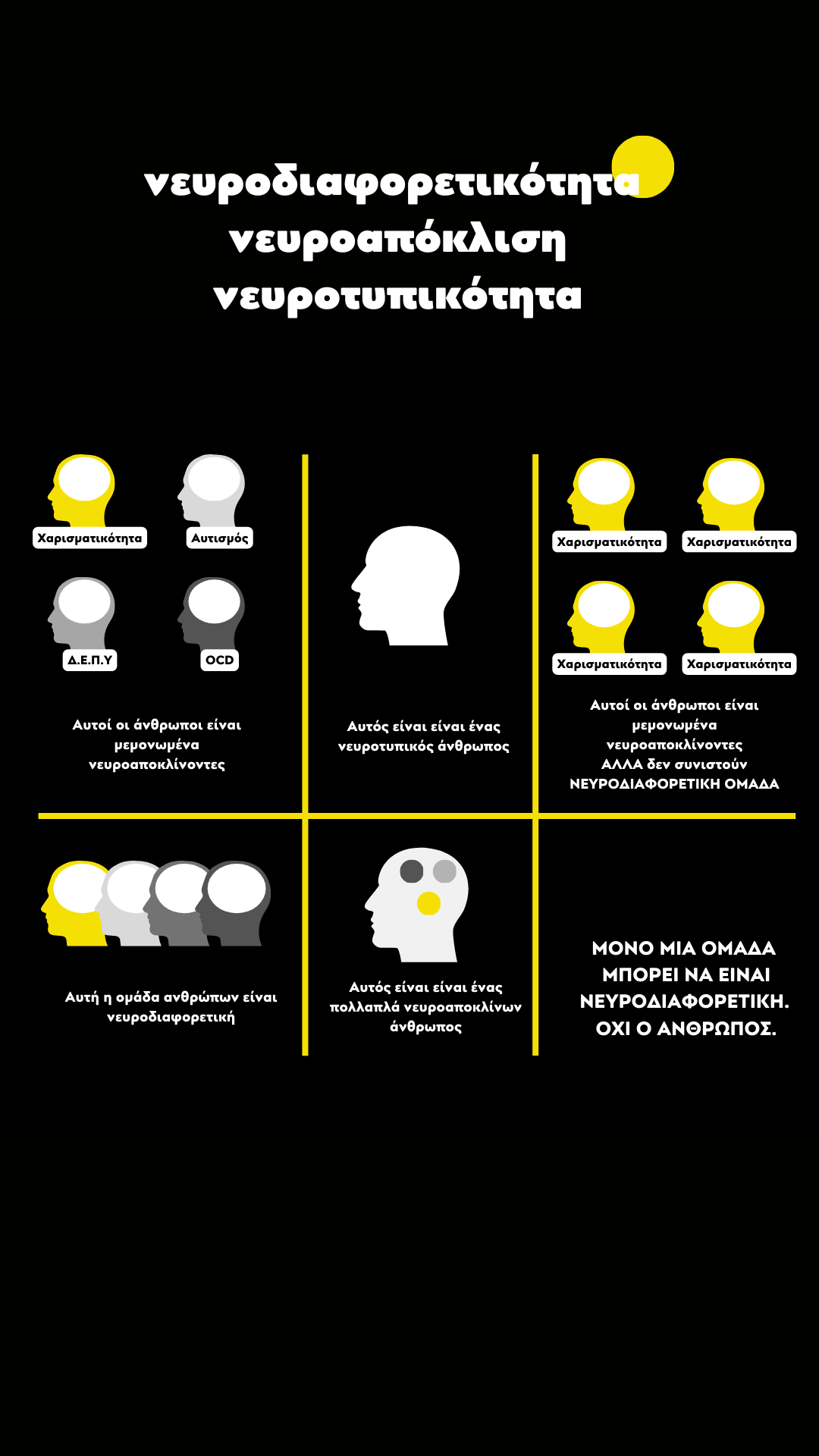
Neurodiversity, neurodivergence, neurovariety—new terms, old reality. There have always been, there are, and there will always be people whose nervous system functions manifest in ways that differ from what is considered typical. However, this is neither an illness nor a problem. The problem is the stigma—not experiencing reality in a unique and authentic way.
If people tell you — or you notice in yourself — the following:
Impulsivity
Disorganization and difficulty prioritizing tasks
Poor management or executive skills
Inability to maintain focus
Difficulty with social interaction and communication
Challenges in shifting or transitioning between activities
Unusually intense and focused attention on details or specific interests
Sensory sensitivity (sound, light, textures) or unusually high tolerance to pain and temperature
Stereotyped movements (mechanical, repetitive motions such as flapping or rocking back and forth)
Self-harming tendencies
Strong attachment to routines or rituals and difficulty adapting to change
Lack of motor coordination (clumsiness) or unusual movement patterns
Doubts and difficulty coping with uncertainty
A strong need for order and balance
take the step.